Sunday, May 31, 2026
Home Blog Page 20

Q&A: Ray Holman

Ray HolmanWritten by Ted Goslin

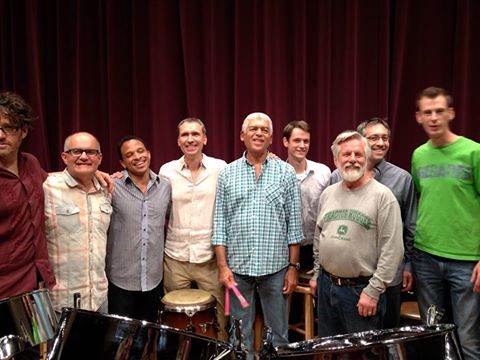
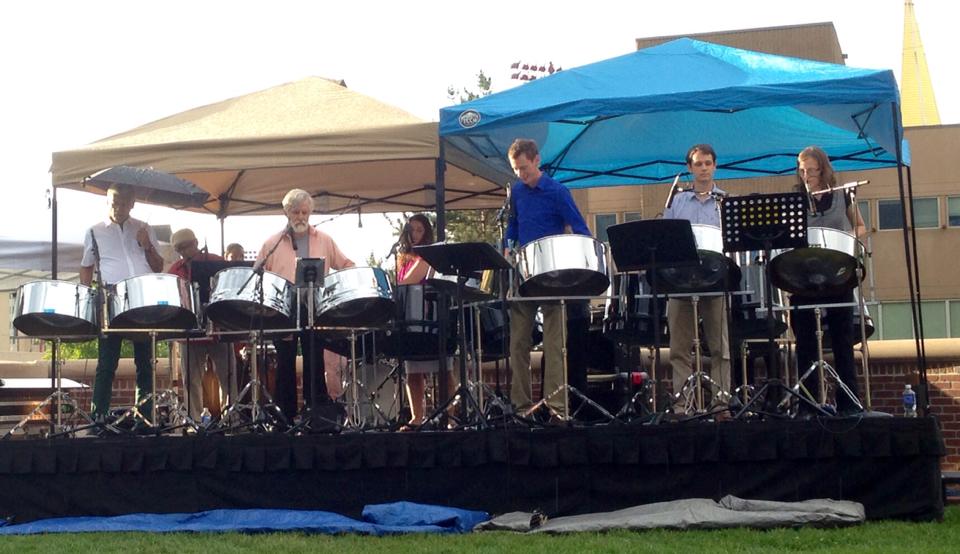
On a humid afternoon in July, Ray Holman plopped down into an armchair in the lobby of the Hotel Morgan, located in downtown Morgantown, West Virginia. The interview location was improvised as a quick solution by Ray after we walked a few blocks in the hot summer sun. Holman and 87 other players and clinicians had just completed the final concert of the Mannette Festival of Steel.

Despite the heat, Holman didn’t seem the worse for wear. His face was stern and serious, eyes burning with the intensity of a hawk searching for prey. Despite his greyed hair, and being 71 years old, his youthful exuberance would rival that of a teenager. Based on his demeanor, Holman comes off as a man who believes in unfiltered honesty while promoting kindness, love and the undying power of music.

Holman has achieved legend status both in Trinidad and globally as an expert composer and player of the steelpan. His accolades include being the first arranger to compose an original piece for Panorama and being a three-time Panorama winner.

When did you first fall in love with pan?
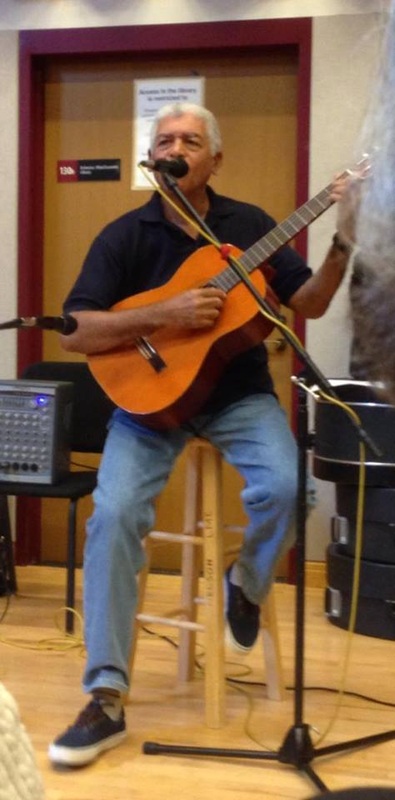
“When I was 13 years old. I lived close to Invaders. I heard them playing and I liked it. I started playing the drums and felt I could achieve something. That was my first experience with music. Pan was the first thing I played. I learned guitar later, which I now use to compose. Solo, I play pan.”

Do you prefer to write out a song using sheet music, or do you prefer to write it out in your head first?
“I use to do it all in my head, then started writing it out on paper and later on the computer. It takes a lot of time to write out but saves time in the panyard because section leaders can learn the part and teach the rest of the section by rote. But rote is fine. It can be quicker for shorter tunes.”

After joining Invaders as a teenager in 1957 and working with Ellie Mannette, who was the leader of the group at the time, what were some of the primary lessons Ellie taught you?
“I learned how to strike the drum. I used to watch him while he was tuning. Strike it too hard and the note is distorted. Because his notes were true, I could develop my ear. All the notes had the same timbre. I learned how to play fluidly to match the timbre of his drums and I never lost it. Other tuners tuned their drums to be played louder. On Ellie’s drums you can’t do that. They’re not meant to be played at a loud volume.”

How did your career as an arranger progress?
“The first piece I arranged was called April Love by Pat Boone. It was easy to arrange. At the time I didn’t have any musical knowledge but it had a nice melody that attracted me. From those days I wrote a piece called Ray’s Saga. We recorded that song in 1961 and it was very popular. Then I went to Starlift. They were defunct and I revived it. I arranged music for them from ’63 to ’74. Then I started to freelance and went to Pandemonium for nine years.”

What was the inspiration for you to break tradition by composing the first original composition in Panorama history with Pan On The Move?
“I thought of it like this: I had already won Panorama twice and thought that to be at the top you had to set the standard. I was kind of revolutionizing arranging styles with chord structures, utilizing elements of Jazz, Classical and others. So I thought when you go to a Calypso tent, you never hear the same song twice from tent to tent. But steelbands were all playing the same songs. Wouldn’t it be nice if every steelband played something different? The pan men at the time were tied to this tradition where they had to wait until a Calypsonian sang something to arrange it. I thought, ‘We can’t keep doing that; things have to change.’ That’s when I did it; I called it Pan On The Move because it was a revolutionary step from one stage to another. Also, because it was for Panorama. In those days, you had to play while moving onto the stage. Because of that you had to make music that made people dance. It’s not only for listening. It’s for dance. Any rhythmic music like African or Cuban is made for dance. We moved from the feeling of gayety and moved to a regimented style. Now the band sets up on stage and plays stationary. That is what changed it.”

What is your favorite piece that you have composed or arranged?
“My Band. We have about 45 percent East Indian population in Trinidad. I grew up in Woodbrook, and up the street there were a lot of Indians who would play Tassa drum music. I just thought of my band and the Tassa drum bands and thought, ‘that’s like my band too.’ So I thought, ‘I want to mix that sound with the steel band,’ but I did not use any Tassa drums in the piece. I had the band play and have the effect. It encompassed the culture.

“Now, you’re getting older, you look back and see the weight of it. When I was 30, I missed things then. When I look back now I see that we had a bias towards people of African decent. We had a bias thinking we were the rightfully privileged group and owners of the island. That our culture was first dominant and we had the right to determine what was correct. So I thought, ‘how could that be right if we have 45 percent that are of Eastern Indian descent? What about Chinese people or people from Lebanon? They have culture too.’ So I was kind of in rebellion against that idea and the suppression of other cultures.

“That was the reason I left Invaders. I was 18 years old. We were doing this piece by Tchaikovsky called, Dance of the Sugar Plum Fairies. There’s a part in the middle of it that had a rhythm. In Russia at the time there was a large population of Asian people. Tchaikovsky got an idea there to use Asian rhythms. So I brought in Tassa music to Invaders in 1962 seeing the same thing. I saw that people danced to it. It wasn’t accepted at the time so I left the band.”

Do you feel Panorama compositions ar e less focused on musicianship and more focused on virtuosity and power?
“Yes. One of the best pieces I wrote was Queen of the Dance. That had all the elements. It had elements of classical, Jazz and Calypso, and it made people dance. I find now that Panorama has lost its nice exciting feeling. Very few pieces now can make you feel the dance. Composers need to think about it differently and try to make people dance and not worry about what the judges think. The winning bands now are all about appeasing the judges.

Pantrinbago appoints the judges. If you ask them they say they can’t get people to be judges. For me a good judge would be someone with a musical background. Someone with no musical background can’t judge. Panorama, when it started, was judged by newspaper writers and academics who couldn’t play without sheet music in front of them. They weren’t performers. Of course, they judged to the limit of their knowledge and experience. That has been the standard ever since.

“Then they decided they were going to have criteria. So they hired a musician, a Trinidadian who taught at Berkeley. He saw what the bands do and figured he would organize it in an order that made sense and it made it worse! I said to him, ‘You know what you’re doing? You’re going to destroy Panorama music.” Everybody now is going to do the same thing and everybody judging now doesn’t know enough not to follow the criteria. It was better when we did not have that. I am in favor of scrapping that criteria. Then you’ll have to have good judges to score.

“When I’ve judged competitions I have noticed that I’ll add up the scores and see that the band I had first did not have the best music. It’s because it becomes mechanical. When they should be listening, they are looking at the criteria and writing.

“To judge, they should get people that know the classics, Jazz, popular music, who have been practicing musicians. They could get someone foreign to judge from the outside. From my experience, people who run programs in the U.S., who are practicing musicians and steel band teachers, know more about the music than the judges in Trinidad. They’re more familiar with the idiom, are better musicians, would be more impartial. We could have a mixture of foreigners and natives.
“What I’m saying might not sound good. I’m not trying to bring anyone down with this. But it’s the truth. I want Panorama to improve and this is the only way it can. How else are you going to improve if you don’t look at it and say ‘how can we do this better?’ I’ve spent my time trying to make the steel band sound beautiful, which is not easy to do.
“In Trinidad, pan is too focused on competition. Competition is good, but if you’re only focused on what I call “competition music,” then that is the worst kind of music you can produce.

What is the best way to promote pan throughout the world, by having competitive festivals or festivals with only groups playing for the sake of music?
“It could be a mixture. You could have a festival like Virginia Beach [International PAN Fest] where it’s about playing for the love of music. Competition is helping to kill steel band music. As a composer/arranger you’re writing to please the judge, not for the music. When I played with Invaders, pan was POPULAR. You used to hear pan at parties. Now you can’t hear pan at a party. They’re focusing on one tune over and over. I was telling them that in the 1980s. If they continue to do it that way, they’re going to kill it.

“The audience today is getting smaller. Most of them are in their sixties. When I was coming up, pan was popular with teens and twenty-somethings. The judges need to change or Panorama will die. I don’t care who gets upset. I will challenge anyone to prove me wrong. You could probably count the people who have tried to do something unique at Panorama on one hand.”

What’s the best thing about being involved in the pan world?
“For me, it’s when you have produced a piece of music, it sounds good, is well played and it makes people happy. And when someone can hear it 20 years down the road and still appreciate it, it makes me feel good.”

Starlift - Penny Lane

Starlift Steel Orchestra performs Ray Holman’s arrangement of the Beatles classic, “Penny Lane.”

WA Production for music producers

Q&A: Liam Teague

PictureHailed as the “Paganini of the Steelpan,” Liam Teague currently serves as the Head of Steelpan Studies and Associate Professor of Music at Northern Illinois University.
Along with Clifford Alexis, he co-directs the NIU Steelband.
His commitment to demonstrating the great musical possibilities of the steelpan has taken Teague to Europe, Asia, and Australia, as well as North and Central America and the Caribbean.
He has performed with many diverse ensembles, including Taiwan National Symphony, Czech National Symphony, Saint Louis Symphony, Panama National Symphony, Chicago Sinfonietta, Vermeer String Quartet, Dartmouth Wind Ensemble, University of Wisconsin-Madison Marching Band, Nexus, TCL Group Skiffle Bunch Steel Orchestra, BPtt Renegades Steelband and Starlift Steel Orchestra.

What made you want to be a musician?
Both my parents (Russell and Pearl Teague) loved music but were not musicians. I feel that music has always been in my DNA. My dad loved classical music and would constantly listen to it on the radio. Around the house he’d always be singing operatic arias and also introduced me to many symphonies, overtures, concerti e.g. Tchaikovsky and Beethoven violin concerti. This made me dream of being a Steelpan soloist with symphony orchestras. My mom always loved steelpan music and would religiously listen to steelband music- especially at Panorama time.

What drew you to the Steelpan as an instrument? My father had a cub scout troop when I was a boy and one of our members, Darren Shepperd (an excellent steelpan soloist and arranger), brought a Steelpan to one of our meetings. This is where I caught the “Pan Jumbie” and immediately asked my dad if I could join a Steelband. He consented and I joined the T&TEC Motown Steel Orchestra.

What drew you to classical music? Mainly my father’s influence. Also, through Mrs. Shirley James (then leader of the Trinidad and Tobago National Youth Orchestra), I was able to take violin lessons as a youngster. This played an integral part in shaping my musical development.

How do you feel about being called a child prodigy? I never considered myself to be a child prodigy, as I started music relatively late (around 11 or 12). However, I did develop at a very quick rate and won my first steelpan soloist competition at the age of 13.

What does that word mean to you? I suppose it refers to a child who demonstrates a great deal of talent not normally associated with someone of such tender years. In many instances, child prodigies may have an enormous amount of technical proficiency but can sometimes be lacking in the area of musicality, usually because they have not had a lot of life experience—though this is definitely not always the case.

Who are your biggest non-Pan musical influences? I listen to so many different styles of music and, as a result, I am influenced by many different musicians. From classical music composers and musicians, to jazz masters like Charlie Parker, John Coltrane, Chick Corea, Herbie Hancock, Joshua Redman, to great musicians in the world music genre (Indian music, Samba, Choro, etc).

Who are your biggest Pan influences? I am influenced by many musicians in the Steelpan world, famous and not famous. I think that my main influences early on as a player were Ken “Professor” Philmore, Len “Boogsie” Sharpe,  Robert Greenidge, Ray Holman, Rudy “Two-Left” Smith, Andy Narell, etc. Jit Samaroo was probably my biggest influence in regard to steelband arranging. Now, I listen to many of my contemporaries, including Victor Provost, Leon “Foster” Thomas, Duvonne Stewart, and even to musicians much younger than I am – Andre White, Kareem Thompson, Freddy Harris III, to name a few.
Why? I consider all of them to be brilliant artistes who are taking the pan into interesting musical (and physical) avenues. They are not satisfied with adhering to the status quo.

What is your goal with the Steelpan as an instrument? To consistently highlight the steelpan’s beauty, versatily and profundity to the world. To create avenues for the up-and-coming generation of Steelpan musicians, so that their creativity can flourish and they can have long and rewarding careers doing what they love.

What are the primary obstacles preventing it from achieving that goal? The Pan, in many segments across the globe, is either not known, or if it is familiar, often is relegated to novelty status. There are some people who are not motivated to shine light on this instrument’s profundity, but prefer to use it as a way to make quick money and are fine with perpetuating negative stereotypes. While I cannot and will not ignore the fact that people need to put food on the table and, at times, may have to perform in less than ideal conditions, I cannot respect those whose ONLY  aim is to prostitute the instrument. This, to me, exemplifies either a lack of knowledge of the pan’s history, or blatant disregard for the people who made so many sacrifices and literally had to shed blood, sweat and tears, so that the Steelpan could rise in such an astronomic fashion. This is one of the obstacles.
Another is that we in the steelband world can often be our own worst enemy. We demand that the general public give unequivocal support to the steelband, yet we  don’t attend each others’ concerts, purchase CDs, accessories, music, etc., and are somehow surprised when the Panman’s plight remains unchanged. Instead, we prefer to engage in discourse that is filled with venom and laced with disrespect.
Another thing that can be unhealthy is our narrow-minded allegiances to a particular band, player or tuner. This type of mindset can often be an impediment towards growth. I feel that one of the solutions is for us to come together with a spirit of love and formulate plans that will reap dividends, not just for individual musicians or bands, but for the steelband movement as a whole.
Many of us need to let go of anachronistic and nostalgic thinking, and really focus on the future. This can take the form of creating new music for the steelband/Steelpan, fostering initiatives for our up and coming generation to be better musically educated, and to be more business savvy, amongst others.

How did you get hired by Silver Stars? The band’s arranger of many years, Mr. Edwin Pouchet, was not well for quite some time. He called and offered me the position. Of course, I jumped at the opportunity. Mr. Pouchet passed away on March 22nd, 2014, and I must offer my condolences to the family and friends of this wonderful human being.

How was your 2014 Panorama experience? It was fantastic. PCS Nitrogen Silver Stars is a class act, all the way!!! Very talented musicians and, most importantly, beautiful people. I believe that they were pleased with the arrangement and I loved how it was executed. This was one of THE most amazing musical experiences of my life!

What do you see for the future of Panorama and what is currently preventing it from achieving that goal? I love the event that is Panorama: the atmosphere, the diversity of the music and the general camaraderie that is exhibited in the panyards between players and supporters. However, it is no secret that I am not an advocate of Panorama, as a competition. Bela Bartok, the Hungarian composer, once remarked that “Competition is for horses, not for artistes”. While competition can be healthy and, if done right, promote development; it can often foster attitudes of ill will, disrespect, indifference and conformity. I see that happening a lot in Panorama, and a huge reason behind that is because it is a competition, not a celebration of music where people pay respect and reverence to these beautiful pieces of art. As a result, many arrangers (certainly not all, and I can’t emphasize this enough), prefer to adhere to the status quo. These are usually because they are trying to create music that they believe will meet the nod of the adjudicators and win the competition, and by extension, guarantee them job security. I can certainly understand their reluctance to deviate from using certain devices that have become the norm and, in some cases, have earned them and their respective bands “success”. The old adage “If it ain’t broke, why fix it?” seems appropriate here. However, I don’t think that this bodes well for the future of the music and art form. I have tried to create arrangements which simultaneously pay homage to tradition and genuflect to innovation.

Do you think Panorama should be seen as its own event or should promote more styles of music, such as Andy Narell’s jazzy approach with Birdsong in 2013 and 2014 (The Last Word, We Kinda Music)? 
While I have tremendous respect for Andy Narell’s work (not just in Panorama), there are other arrangers who have created beautiful and intriguing pieces of art in Panorama that have not received the type of publicity that he has. Unfortunately, many people are not motivated to seek these musicians and their work out. As I have said on many occasions, Panorama arrangements need to be assimilated, analyzed and appreciated, well after the event is concluded. Just like music students reverently absorb the vocabulary of Beethoven, Mozart, Charlie Parker and John Coltrane, in conservatories and universities across the globe, so too should our pannists and the general public investigate the brilliance of our steelband arrangers and ensembles. The arrangements also need to be documented for posterity and educational purposes.

How can Pan truly be considered a musical instrument that lives on the same level as the piano or guitar and not as a novelty? The pan is considered a novelty by some, not by all. The majority of stakeholders have been progressive minded. This instrument has grown in such an astronomic fashion and just needs to be better marketed. It is probably one of THE most versatile and beautiful instruments in the world.

What advice do you have for the professional Steel Pannist looking to progress the instrument rather than continue its novelty “island” status?  Study your craft. Immerse yourself into the history of the instrument. Do not settle for the status quo. Bring something new to the table. Believe in the power of the Steelpan—people’s jaws still drop in disbelief when they witness this amazing instrument, especially when it is played well. Be a musical chameleon. Never forget to pay homage to the people of Trinidad and Tobago. The sky is the limit.

Learn more about Liam Teague at his website: http://liamteague.com

WA Production for music producers

Q&A: Andy Narell

PictureAndy Narell has been teaching, performing, composing, arranging and recording steel pan music for over 35 years. He is considered by many to be one of the greatest Pan players of all time and has helped push the possibilities of the instrument over the decades since his debut. He has worked with artists such as Chucho Valdes, Bela Fleck, Marcus Miller, Maraca y Otro Vision, Willie Colon, Bebo Valdes, Flora Purim and Airto, Tito Puente, Orquestra Aragon, David Rudder, and Black Stalin, among others. As a bandleader and soloist he has played hundreds of concerts and jazz festivals throught the USA, Canada, Europe, Japan, the Caribbean, South America, and Africa.
In 1999 Andy became the first foreigner to compose for Trinidad’s Panorama steel band competition, guiding the 100 player Skiffle Bunch Steel Orchestra to the finals of both the 1999 and 2000 Panoramas. In light of his most recent Panorama experience, and his continual presence in the global Pan community as a composer and educator, PM sat down with Andy to discuss his life and times.

What made you want to become a musician?
When I was about 13 or 14 my parents bought me an FM radio and I discovered a station called WLIB, broadcasting jazz full time from Harlem. They had DJs like Billy Taylor, who was himself a great jazz pianist and probably the most knowledgeable jazz musicologist alive. I fell in love with the music, and with the individuality of the people behind it. I wanted to be like Miles J. Afterwards I was a pre-med student in college, but that didn’t last long. While I was in school I made up my mind to become a composer and recording/performing artist, finished with a music degree and when I left school, my real education began. I’m still studying.

When and how did you first fall in love with Steelpan?
I was seven years old. My dad was doing social work with street gangs on the lower east side of Manhattan and hit on steel band music as a community center program activity. He didn’t realize until later that the same type of kids he was working with had created the Pan. I guess the love really started when I switched from a four note Bass Pan to a Tenor Pan, where I found I could play all the tunes by ear without searching for the notes. But I fall in love with Pan all the time. It’s an ongoing affair.

Who are your biggest influences on Pan and your biggest musical influences in general?

I feel I’ve been equally influenced by all the good music I’ve been exposed to from all over the world. I could make a list here, but it would just go on and on. Pan soloists that I have admired include the earliest pioneering improvisers like Theo Stevens, Cobo Jack, Block and Belgrave Bonaparte, Herman Rock Johnson, continuing on to Earl Rodney, “Boogsie” Sharpe, and Robert Greenidge. I’ve learned a lot by listening to the arrangements of Tony Williams, Ray Holman, Clive Bradley, Beverly Griffith, Earl Rodney, “Boogsie” Sharpe, Robert Greenidge, and Jit Samaroo, among others. Finally there is Ellie Mannette, whose vision and dedication to perfecting the Pan has set a standard for nearly 70 years, and who is responsible for the sound of the instruments I play.

What is your biggest goal with your compositions for Steelpan?

As far as I’m concerned, the bar was set so high by my idols – Miles Davis, John Coltrane, Bill Evans, Cannonball Adderley, Herbie Hancock, Wayne Shorter, Stevie Wonder, the Beatles, and composers like Stravinsky, Debussy, Ravel, and Bach, that I can spend the rest of my life just trying to reach that level, never getting there, but it would be a life well spent. I’m just trying to become a better composer, to make music that people enjoy. The biggest goal I suppose would be to compose music that would inspire people the way I’ve been inspired by the great music I love, but that may be a stretch. For now, I try to challenge myself and break new ground with each new composition, hopefully add something to the world of music that wasn’t there before.

What is your goal in arranging for Panorama?
I see Panorama as an opportunity to work at steel band music on a high level, to compose for 100 players and perform it in the biggest steel band festival in the world. I’m trying to stay true to myself and compose the best and most original music I can for steel band, which isn’t easy, considering the pressure to conform, the judging, etc.

There was recent controversy over your 2014 piece, “We Kinda Music,” receiving a last place score, which kept Birdsong out of the finals. Some critics of your style claim it doesn’t conform to the traditional Panorama sound and your writing style isn’t representative of the culture of T&T. Considering this, do you think perhaps this event is the wrong place to showcase your recent compositions? Why or why not?
We came in last place in the big band category at the semi final. In my opinion, the judges ignored a very good performance at an acceptable Panorama tempo because they apparently didn’t like the direction I was taking the music, but there’s no way I can really know what was going on in their minds. I listened to the recording of the performance and I saw the score sheets. One of the five judges had us in second place, by the way.
To those that say that I have removed the cultural connection to Trinidad and Tobago from my music, I would just have to respectfully disagree. I would further point out that Panorama began as a festival featuring and rewarding innovation back in the 60’s. The first arrangers to win Panorama were Tony Williams, Bobby Mohammed, Beverly Griffith, Earl Rodney, and Ray Holman – all innovators who were revolutionizing steel band music at that time. Beverly Griffith put a jazz solo into Obeah Wedding in 1966, the crowd loved it, and the Desperadoes won. The first Panorama arranger to get hit with the accusation of removing the cultural connection to Trinidad from his music was probably Ray Holman, when he decided in 1972 to arrange his own tune instead of a calypso. He has stayed true to his own musical voice for more than 40 years and has been treated badly by the judges over and over. “Boogsie” Sharpe suffered a decade of rejection by the judges for being too innovative.
The whole time I was working with Skiffle Bunch in 1999 for “Coffee Street” I was told ten times a day what I needed to do to turn it into a Panorama tune. To this day, people come to me and tell me they love that tune but don’t think it was Panorama music. If you watch a tape of the TV broadcast of the 1999 Panorama finals you’ll hear a 15 minute discussion during the changeover; the commentators were arguing about whether that tune was either inappropriate or the best thing that could happen to Panorama. The main difference between then and now is that we made it to the finals, the public got to see it on TV, videotapes, and listen to the CD.
To me it’s not a question of the music being culturally disconnected or inappropriate for Panorama. The whole idea of ‘conforming,’ which has been taken to the extreme of arrangers putting the same clichés and runs into their tunes year after year, knowing that the judges like those things and will reward them – that whole way of thinking is impossible for me. If I wanted to do that I would be writing music for TV shows and commercials, making some real money. You asked me earlier who my influences were and I mentioned the names of some of my musical idols. How do you think those people would have responded to this question? Conforming, trying to sound like everybody else, is totally antithetical to what I’m trying to be as a musician, composer, and human being.
At every Panorama, I’ve tried to bring music that was appropriate to the occasion, music that people would enjoy, and that would give my band a chance to play in the finals. People on the track were listening and really enjoying “We Kinda Music” and I’ve had feedback from all over the world, people saying they loved it and couldn’t understand how that performance could land in last place.

You recently performed with the Cal State University Long Beach Steel Drum Orchestra. What did you think of that experience? What is your opinion of steel band in schools in the U.S.? What value can a steel band bring at the university level?
Steel bands in US schools are growing at a fantastic rate, and the level of playing is higher all the time. A lot of this is due to the emergence of steel band directors who played themselves when they were in school, have gone to Trinidad, have gotten to work with the best arrangers and players who come in as guest artists. When I first started teaching at universities in the early ‘80’s, virtually all the steel bands were being run by classical percussionists who had no experience playing or arranging for pan. That first generation broke the ice and got it going, but it’s the next generation of teachers who are now taking it to another level.
I teach at a lot of universities, and there are a lot of good programs now. There are also some high school programs that are playing at a college level and are quite a shock to see. It’s amazing what you can do when you have kids an hour a day, five days a week, for four years. Cal State Long Beach is one of the good college programs; Dave Gerhart did a great job with the band, and I enjoyed playing with them, as well as with the Massive Band they put together with local programs.
I think the benefits of steel band music at the university level are pretty obvious. It’s challenging, fun, and the kids get exposed to a world of music that they wouldn’t otherwise learn about. It broadens their musical skills, challenging them to learn how to play different styles of music.
Steel band music is also unique in how it brings people of all different kinds of backgrounds together to play in a large ensemble. And the most obvious benefit, the one that is often overlooked, is that it’s job training. There are more and more steel bands in the schools and there is a need for teachers. Experience playing in a university steel band program just might get you a job.

Recently, the Virginia Beach Panorama took place with a variety of high school and community steel bands taking part. The headliner of the event was Victor Provost. Are you familiar with him? If so, what is your opinion of his musical style and what he brings to the instrument? Who do you see as the future of the instrument and why?
I love Victor Provost. Great person, great player. He’s worked really hard at developing a bebop approach to playing pan. His album of jazz standards is groundbreaking and definitely worth checking out.
I see the future of Pan being guided by young Pan players and arranger/composers who are going to school, studying music seriously, looking at what has been accomplished in the larger musical world, not just Pan playing and steel band music. That invisible wall between the Panman and the musician is coming down and the next generation is getting their act together, going to school, learning harmony and scale theory, world rhythms, etc.

Where do you see Pan headed in the next 10 years and what role do you see yourself playing as it plays out?
A couple of years ago I played a gig in Brooklyn that featured young Pan soloists who were mostly in school at Berklee College of Music in Boston  – Andre White, Kareem Thompson, Iman Pascal, and Earl Brooks Jr. They were all good, all kids coming from the Trini community, and none of them were playing the standard Tenor Pan clichés, all those fast runs that don’t say anything. I was really encouraged about where we’re going. There are some really talented arrangers coming along – Vanessa Headley and Andre White stand out for me, among others.
The problem is that it’s more and more difficult to start a career in music and make a living at it. Meanwhile, Pan is growing all over the world. They’re getting serious in Japan. Some of those young players are coming to Trinidad and they’re playing front line with the best bands. Some of the best original steel band recordings have come out of Calypsociation in Paris. There are high school kids in the USA who are playing the most difficult steel band charts by myself, Ray Holman, Boogsie, etc. Meanwhile, Ellie Mannette made a huge breakthrough and trained a group of young tuners who can carry on the work at the level he’s reached. Some of them will hopefully start teaching in the first university program where you can major in pan building and tuning.
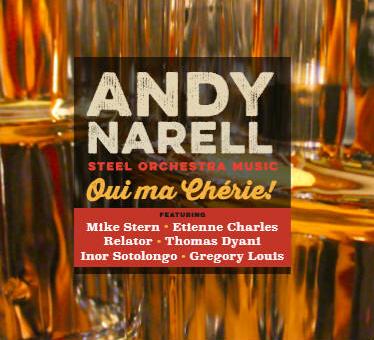
I turned 60 this year, have been playing Pan for 53 years now. For me it’s a race against time. I’m trying to become a better soloist, and to produce some good music. I’m putting out a new album of steel band music this summer. I played all the Pans and it features Mike Stern, Etienne Charles, Relator, Thomas Dyani, Gregory Louis, and Inor Sotolongo. It will be available at my website, www.andynarell.net.
I’m also working on a series of solo recordings that I hope to put out soon. I’m working on a book, ‘Harmonic Improvisation for Pan Players.’ It basically explains what I’m practicing and why.
I’m teaching year round, at universities and high schools in the USA, at Birdsong in Trinidad, Calypsociation in Paris, Switzerland, South Africa, and I teach the kids in Laborie, Saint Lucia, where I spend a couple of months a year.
We’ve had a large contingent of foreign players at Birdsong the last two years and are working towards having a program where students will receive college credit for coming to Trinidad to play Panorama with Birdsong, take master classes, etc. It might even be in place for 2015. I did a project last year with Trinidadian conductor Kwame Ryan – my quintet and a symphony orchestra, with orchestra arrangements by my son Isaac. I’m hoping that project will have wings, and of course I’m still doing the University of Calypso with Relator. I have quintets all over the world that know my music so I can travel alone and still have my own band wherever I go, and I get to sit in and play with a range of people from all over the world.
I guess I’ll just keep doing what I’m doing, which these days means there’s always something new and interesting on my calendar. I hope I can stay healthy and keep growing and make some good music these next 10 years and beyond.

"We Kinda Music" Birdsong Panorama 2014

WA Production for music producers

Q&A: Duvone Stewart

PictureCurrently the arranger for the BP Renegades in Trinidad and Tobago, and a world-renowned soloist, Duvone Stewart has built a reputation for innovation on the Steelpan.
PM sat down with Stewart to discuss his work, goals and thoughts on the future of Pan.

How did you get started with Pan?

I began my musical career at the tender age of six. I was tutored by Gwyneth Armstrong in both theory and practical music on the piano. During this period I performed creditably at Trinity Music Exams- an initiative of the London School of Music. Consequently, my joy for music blossomed. After accompanying my parents to a steel orchestra practice one evening, I picked up a pair of tenor pan sticks and the rest was history. My fingers began to tickle me immensely. Little did I know that I made a connection that would transform my life forever. In less than two hours of playing around with the instrument, I was able to play “Mary Had A Little Lamb” with my eyes closed. At that point I ran to my mother and expressed my desire to learn to play the Steelpan. After seeing what I was able to accomplish in a short space of time, my mother, Virginia welcomed the move, and that is how I got started with the Steelpan. Then, at the age of eight, I started playing with the ‘Trintoc Tobago All Stars Steel Orchestra’ where I learned to master the instrument.

What do you love most about the instrument?

The instrument is magical. When one listens to the sounds that emanate from the playing of a wooden stick with rubber at the head on an oil drum, you become mesmerized. The wide range of tones; how euphoric! Additionally, the instrument is very versatile. A player can play the melody of a song with the Steelpan and utilize that same Pan to play accompanying parts. The capabilities of the Steelpan expanded tremendously with the creation of an electronic Steelpan, the E-Pan an invention of Salmon Cupid. Now you can be on an E-pan and have a full orchestra while performing solo or even utilize the E-pan and allow the Steelpan to sound like a violin, a piano, a saxophone or any other instrument you could think of. The magical nature and colossal capabilities of the Steelpan are what I love most about the instrument. Just pure ecstasy!

Who were your biggest musical influences, both Pan and non-Pan related?

My Pan-related influences were Gwyneth Armstrong, Dr. Jit Samaroo, Robert Greenidge, Len ‘Boogsie’ Sharpe, Liam Teague, Andy Narell, Ken ‘Professor’ Philmore, Leon ‘Foster’ Thomas, Seion Gomez, Arddin Herbert, and the list goes on.
Mrs. Gwyneth Armstrong was my very first Music teacher and at the time was the Trintoc Tobago All Stars Steel Orchestra musical arranger and conductor. Her discipline, humility and prowess as a musician have impacted my life tremendously. Dr. Jit Samaroo is a luminary in the art form who has made such an indelible mark locally and internationally with his magnificent arranging style. Additionally, Robert Greenidge has served as my musical father throughout my musical journey.
My non-Pan related influences include Stevie Wonder, Mario Canonage, Michel Camilo, Tabou Combo, Kassav, Bebo Valdez and so much more.
Though I had no direct contact with Stevie Wonder, he influenced me tremendously. He exudes humility, passion and professionalism. Even though he possesses what are seemingly four out of five senses, he still delivers high quality music. Stevie, like many others, exemplifies that the music industry is not just about music but also about being a humanitarian. Moreover, Mario Canonage, a pianist from Martinique, is the crème de la crème of Caribbean Jazz. In 2002 or 2003, when I had the first opportunity to visit France, Mario was a member of the first ever band I played with there. It was surreal meeting him in person since to me he was a legend, one of my favorites.

What year did you first arrange for Panorama, how did you get into it, and how did you enjoy your 2014 Panorama experience?

I first arranged in 2001 for La Horquetta Pan Groove.’ My commencement into the arranging realm emanated from an invitation from Ross Thomas, a member of this steel band. The experience of an arranger is simply phenomenal. I continue to be in awe and forever grateful to God when I see how my arranging capabilities continue to expand to unprecedented levels from my inception in 2001 to present. In retrospect, being trademarked as an arranger is like the start to self- actualization. My 2014 performance was ecstatic. Though the preparations were hectic, the results were phenomenal. I arranged for three bands ‘San Jan Eastside Symphony’ and ‘Pan Elders,’ who placed first in the Small and Medium band categories, and ‘BP Renegades,’ who placed third in the Large band category. I continue to thank God for these successes.

What does it mean to you to have your 2014 Panorama competition piece, In de Minor, inducted into the International Steel Band Hall of Fame?

Being cognizant of the history of the inductees on the Hall of Fame, luminaries and virtuosos like Dr. Jit Samaroo, Len ‘Boogsie’ Sharpe, Ray Holman and even Andy Narell, I feel totally humbled and extremely honoured to have my name etched among these stalwarts. I also feel vindicated to know that hard work has it rewards and that my efforts are appreciated on an international level.

At the Virginia Beach Panorama this past May, we had a chance to catch up with Ray Holman, who discussed the difficulty arrangers face in pairing their style with the embedded style of an established band. This is in light of what you likely have experienced with the Renegades, considering how engrained the style of Dr. Jit Samaroo (the former band leader) was in that band. Is there any truth to that? If so, what were some of your biggest challenges in that regard?

Firstly, you must understand that I was not chosen to be the arranger of BP Renegades or the successor to Dr. Jit Samaroo by chance. I was privileged to learn Dr. Jit’s style from 1987 to his last arrangement, and even now I constantly listen to recordings of his arrangements. Consequently, I am aware of the type of music that the Renegades are accustomed to and the style they require. Thus, like any skilled arranger I have fused my own style with the style that my clients require in my attempt to ensure that they are totally satisfied with the product. I continue to allow their music to evolve. Most importantly, their confidence in me has allowed me to be confident in the product that I have given to them over the last three years. Moreover, there are really no challenges for me when it comes to utilizing my own style. Music is a business and every customer or client requires a product and I ensure that I give my clients the products that they require.

What are your immediate and future goals with Pan as an instrument?

My overall goals are to increase the number of my recordings, workshops, symposiums, lectures, and to ensure that the Steelpan and its music are given the international respect that they deserve. Additionally, I also would like to pave way to have the Steelpan inducted into the different award groups like the Grammy awards.

Will you be arranging for NY Panorama this year? How about Panorama 2015? What bands?

Yes, indeed! I love New York Panorama and I will be arranging for the band ‘CASYM’ both this year and next year. And for Trinidad & Tobago Panorama for the BP Renegades, Pan Elders & San Juan East Symphony.

What are your feelings regarding the view of Pan globally as an instrument and how we as a community can change the stigma attached to it as being purely an “island” novelty?

Indeed, tremendous strides have been made with regards to the Steelpan internationally. The Steelpan is used as either a solo instrument or incorporated into an orchestra in Europe, Canada and many other Caribbean countries for concerts, festivals and many other types of functions. Furthermore, the Steelpan is used to bridge the gap between different genres of music. Surely, it is not a mere novelty in the international realm. I am in admiration of the respect that the Steelpan is given internationally. I believe that the requisite powers in Trinidad and Tobago can do more to ensure that the instrument is given the respect a national instrument deserves. Funding more Steelpan related programs, standardizing the instrument and just giving greater respect to steel pan players will undoubtedly change any stigma that is related to the instrument.

Do you teach privately? If so, what are some techniques you can pass on to players to help them improve as soloists and as ensemble players?

I do not teach privately. However, I constantly interact with both young and old persons in various spheres at Steelpan theatres, workshops, while lecturing and other occasions, and I constantly reiterate the three basic virtues that will make anyone not only an exceptional player but also a phenomenal individual. Firstly, always be professional. Secondly, be entertaining, and lastly, constantly recreate yourself and your music. With regards to a player’s techniques, there are certain basic techniques every player would learn, just practice these consistently and expand on the style that the player is most comfortable with in order to develop the player’s own style and musical identity.

Duvone Stewart Larnell Lewis I Feel Good Jan 09

WA Production for music producers

Q&A: Tom Miller, Pan Ramajay

PictureThis past July, hundreds of players and educators flocked to Denver, Colo., to attend the Pan Ramajay Summer Steel Drum Festival. The six day workshop took place on the University of Denver campus and featured classes and performances by some of the top players and educators from around the world, including Ray Holman, Alan Lightner, and festival founder, Tom Miller of Pan Ramajay.
PM recently caught up with Miller to discuss the festival, its roots, this years event and the impact its made on the Steelpan community.

How did the Pan Ramajay Summer Steel Drum Festival come to be? When did it start?
I was very fortunate to have been involved with Ellie Mannette’s, Festival of Steel, in Morgantown, W.V., each summer until 2008. It was such a wonderful experience to see Pan players come together to learn from and make music with Ellie and Pan greats Andy and Jeff Narell, Ray Holman, Robbie Greenidge, and others. I noticed that the majority of participants were largely from the eastern half of the US, which is in a closer proximity to West Virginia. It gave me the idea the perhaps a Pan festival located in the western half of the U.S. could accommodate Pan players from the western states that could not make it back east for whatever reasons each summer. So, in 2010, I started the Pan Ramajay Summer Steel Drum Festival on the University of Denver campus. It is a fabulous facility and Denver happens to have great access by air and automobile travel from the western states and U.S. at large. We have just held our fifth festival this past July with great success. Our guest artist faculty featured Ray Holman, Alan Lightner, Jim Munzenrider, Don Prorak and Rick Henson.

What is the goal of the festival? 
The festival is a five-day event that focuses on Pan performance and education. The schedule of classes and events explores the music, technique, history, arranging, percussion rhythms and even how to utilize technology in Pan practice. Participants are typically grouped into one of three performing ensembles according to their self-determined experience level. The levels range from beginner to intermediate and advanced players. The groups have four rehearsals daily interspersed with convocation meetings and elective sessions. Evening concerts are also scheduled throughout the week.

Were there any stand-out moments or seminars from this year’s event? If so, what were they? 
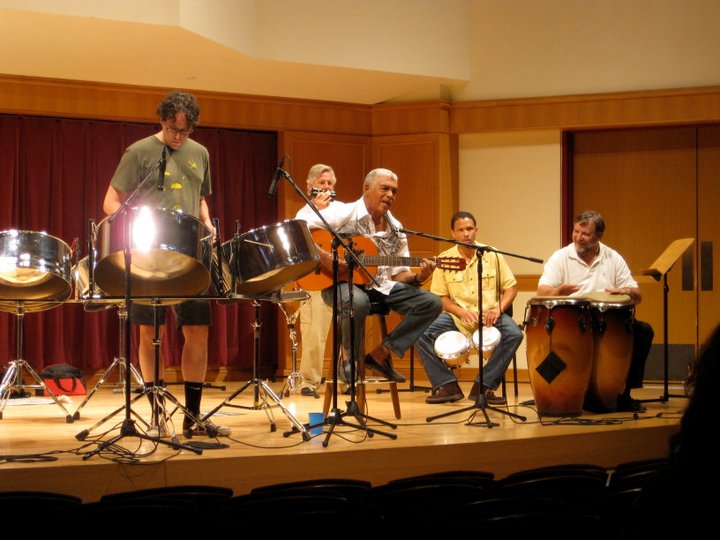
We were fortunate to have Ray Holman return to the festival again this year. Ray always brings such beautiful Pan music to this event. Ray also did a session of his musical influences throughout his career by performing on nylon string guitar and singing calypso. We also presented an evening concert through the University of Denver’s Summer Concert Series with the Pan ensemble, “Pan Nation,” featuring the guest faculty on some of their original compositions. The concert helped us reach the community at large in Denver, which was good exposure for the festival as a whole. Also, the great new music that Alan, Jim, Don and Rick bring always stands out.

What are some of the songs played during the closing concert? 
The concert features a fair amount of original compositions and Ray’s 2014 Panorama entry, “The Wedding,” was performed as well as a gorgeous new ballad written by Ray in more of an orchestral style, sans drum set and engine room percussion. Don wrote a beautiful new tune, “Tempus Fugit,” which has a really unique feel for Pan. Alan’s, “Rise High”, Jim’s, “Off to the Races” and Rick’s, “Do you Mean It,” were also some of the originals featured. I will eventually publish all this original music from the festival at my sheet music website, ramajay.com, which really is a plus to continue building the existing repertoire of steel pan music out there.

How many people participated in the event this year? Is this an increase or decrease from previous years?
This year we had 52 people involved including the guest faculty and our pan tuner, Darren Dyke, who is essential to the week, as you might imagine. This is pretty much on par with past years’ participation, give or take. I have to say, that it really is all the participants that make this festival happen each summer and we could not do it without everyone. They all bring such an infectious enthusiasm and spirit to the week that creates a special sense of pan community, which in turn encourages and fosters the learning and creative process.

How will events like this impact the steel pan movement in the U.S. in the long run? What is the state of Pan today, both globally and in the U.S.? 
My hope is that events such as Ramajay Summer Pan Fest, the Mannette Festival of Steel, the PANorama Caribbean Music Fest in Virginia Beach, and all the localized state festivals, will bring a greater knowledge and awareness of Pan, not only to participants, but to the public at large. The Steelpan movement has grown so much in the time I have been involved with it but it still is really in an infancy compared to other instruments. People need to hear more of this beautiful instrument and the beautiful original music that is being written for it now.

Are there any special plans for next year’s event?
Next years Festival dates are July 19-25, 2015.  We will begin the planning process again later in the fall and updates can be found at ramajaypanfest.com as they occur.
Thank you for expressing interest in the Ramajay Summer Pan Fest and providing this interview for Pan Magazine.


WA Production for music producers

Q&A: Victor Provost

PictureWith a flare for combining the best of traditional Bebop Jazz with other musical styles, such as Calypso, Victor Provost has made a name for himself  as one of today’s best Pan players and an innovator in terms of his own smooth, fluid sound. PM spoke with Victor recently about his style, background and opinions on the future of the instrument.
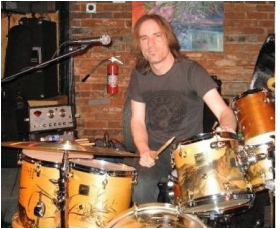
How did your journey with music begin?
I was interested in music even as a young child. When I was growing up, my father would play songs on the guitar or piano. We had various drums and horns scattered around the house, but I’d sit at the piano with him and he’d show me how to play little tunes like “Fur Elise” or “Sentimental Journey.” One of his favorites to play was Joe Zawinul’s “Mercy, Mercy, Mercy.”

How and when were you first introduced to the Steelpan? What about it made you choose it as your primary instrument?
I was 10 years old and I was practicing for my piano lesson at the St. John School of the Arts (SJSA). It was a small building – one room upstairs and a small office downstairs with a piano. I was practicing downstairs and I heard this amazing sound coming from up above me, so I went up to check it out. It was the first time I remember hearing a steel band – I’d heard Pan before, but I must have been at an impressionable age, because this particular afternoon that sound made an impression. About 30 of my classmates were pounding out a soca-fied arrangement of the theme from “Chariots of Fire”. So I found an adult and asked if I could join. Sis Frank, the matriarch of SJSA (and of music of St. John) handed me some sticks and said “there’s a Pan over there, just watch what Barry is doing.”

Who are your biggest musical influences, both on Steelpan and other instruments? Why?
Way too many to name properly. But my earliest influence was vibraphonist Milt Jackson who was introduced to me by one of the great unsung heros of Pan, Mr. Rudy Wells (who directed the youth steel band I was in).
It might be easier to list the first records I listened to after I found them in my father’s record collection: Somethin’ Else(Cannonball Adderley), Getz/Gilberto (Stan Getz and Joao Gilberto), The Promise of a Future (Hugh Masekela), Light as a Feather (Chick Corea and Return to Forever), and Children of Sanchez by Chuck Mangione. I spent so much time listening to these records and trying to play along with them – I didn’t know what the hell was going on, but I had a good time pretending I did!
I also grew up listening to the guys I like to call the “celebrities of Pan”: Robbie, Andy, Liam, “Boogsie,” Ray, “Professor,” Earl Brooks, Othello, “Two-Left,” Haffers. I had a bunch of the “Pan Assembly” cassettes and CDs that featured most of these guys. I had all of Andy’s albums, got whatever “Boogsie” I could get my hands on, had a bunch of Monty Alexander records featuring Othello, etc. I listened to it all and I appreciated the fact that they had all created a distinct voice for themselves – I think that’s important; the development of an individual voice and style.

Tell us about your Pan.  How did you come to settle on that particular design and why did you choose the Tenor Pan as your instrument?
I have several instruments (all tenors). I have a low D built by Egar Mayers, a Low C “rescue” that I believe was built by Harrigan, a Low C built by Glenn Rowsey in Morgantown, WV, and a Low G “oversized” tenor built by Kyle Dunleavy in Philadelphia, Penn. I started on tenor because there was an empty one in the band and because the steelband I played in as a kid didn’t encourage switching instruments, I got comfortable on it quickly.
About five years ago I saw a Low G tenor that Glenn Rowsey had built, but he gave it to his mentor Ellie Mannette as a gift. I mentioned the Low G to Kyle one day in passing and a few years later he sent me a message saying he’d built one. I drove up to Philly, played it for 15 minutes and took it home. Having the range of a double second (minus a few half steps) in the fourth and fifths pattern I’m accustom to gave me the best of both worlds. I’ve been playing and recording with it almost exclusively these days.

In your 2011 debut album, “Her Favorite Shade of Yellow,” the genre seems to be Bebop-infused jazz, with hints of Caribbean flare. Is this what you would call your preferred style/genre, or do you plan on expanding to include mixed genres like Pop, Rock and Funk?
The album was absolutely conceived of as a “straight ahead” jazz record. I’ve spent a long time studying (and continue to study) bebop as a foundation for my improvisational style and I wanted that to show on “Her Favorite Shade” (which is dedicated to my wife, Rachelle). We recorded it the way a typical jazz quartet would – all live, no overdubs – to insure that there was maximum interplay between musicians. Some of the arrangements are Latin-infused, and my nod to the culture was an arrangement of Kitch’s “Rainorama”.
It’s very unlikely that I’ll ever record any modern pop, but some music by the greats like Stevie Wonder, Chaka Kahn, Prince, and Michael Jackson may show up on future projects. I don’t convincingly “rock out,” so I’ll leave that up to the guys that do.

Are you planning on another album any time soon? If so, what will the focus be?
I’ll be beginning work on a new record this fall and will be releasing it next year. This record will focus on my original compositions, and will be more groove-oriented, but will hopefully retain the colorful harmonic pallet I’ve been trying to develop. I’ve had lots of inspiration since the last record, including my 5-month-old daughter, and I’m really looking forward to sharing this music.

What has it been like performing and recording with legendary jazz artists like Paquito D’Rivera? Is there anyone you hope to perform with? What do you hope to take away from performing with such jazz legends?
Over the last few years I’ve had the pleasure of working with some of my earliest influences like Paquito, Dave Samuels, and Hugh Masekela, as well as some of my contemporary “idols” like Nicholas Payton and Joe Locke. Working with a luminary like Paquito D’Rivera is surreal – not only is he one of the most incredible musicians on the planet, he also has a great sense of humor and is just a wonderful person to be around. I consider myself fortunate to be able to learn from and make music with him – and with all of the guys I named above. I have a long “wish list” of people I’d love to perform with, including Stefon Harris, Joshua Redman, Herbie Hancock, Esperanza Spalding, João Bosco, Vince Mendoza, Dave Mathews, any and all of the Marsalis brothers (and Ellis!), Sonny Rollins, I’d better stop there!
No matter who I’m on stage with, I consider each performance a lesson. After almost every show (sometimes during), I’m asking one of my bandmates “hey man, what was that you played over such-and-such chord?” Its real music nerd stuff. When I get to spend time with more established players, I tend to ask less musical questions and ask more life questions: “How did/do you balance career and family life?”, “What do you think of the record industry?”, “How do you keep your laundry fresh on the road”, “How do you eat and stay healthy with such an unpredictable schedule?” Questions like that.

In May of this year you headlined the Virginia Beach Panorama Fest in Virginia Beach, Va. What was that experience like for you? Do you see yourself returning next year? Is this type of event appealing to you as a player? Why?
I had a really incredible time at Virginia Beach this year. What a great opportunity to put together the rhythm section of my dreams (Alex and Zach Brown, Billy Williams, Bobby Thomas, Jr.) and add to that my friend and wonderful vocalist Rudy Faulkner PLUS the great Positive Vibrations Youth Steel Orchestra!  I’d welcome the opportunity to play the festival again anytime, although I think the directors there do a good job of keeping it fresh with new acts every year. I’ll be at the festival in 2015, even if just as a supporter/spectator. The evening concerts have a great vibe and everyone there loves pan. It’s really an awesome venue.

How do events like the Virginia Beach Panorama help or hurt the Steelpan movement? How can events like this help to improve the image of Pan as an accessible instrument to all?
I’m always wary of using terms like “the steelpan movement” because I don’t see that a codified, unified movement exists in earnest. That idea means different things to different people and groups of people around the world. The festival in Virginia Beach has done a good job of finding a very difficult balance. They’ve created a festival that includes what is probably the most organized steel band competition in the western hemisphere – this in itself is no easy task.
They attract bands that represent a wide range of ages, talent and experience levels (although mostly school-aged and average-skilled) and have created an environment where these bands from schools, private studios, and community groups can get quantified feedback and comments from qualified judges. Each year there seems to be a surprise stand-out performance, and that is encouraging. If there is any criticism to be made of the festival, perhaps it is that it “over-academicizes” an art form that, historically, has flourished in the community, not the academy. This is evident in the number of bands each year playing the same arrangement of “Sunset” or “Bahia Girl”!
I don’t know that we need to improve the image of Pan as accessible to everyone – I think it already has that image, perhaps too much so! Certainly the steel band is one of the fastest growing community music ensemble types in the U.S. and for the last several decades they have been growing exponentially in American schools and universities.
The question is: Given the accessibility of the instrument – that is, the relative ease with which it is learned on a rudimentary level – how do we ensure that those accessing it have the skills and understanding to move the instrument forward, to move it beyond the rudimentary level?

What is your feeling on the current state of Pan and how it is viewed as an instrument around the world? Based on your travels, are there places that seem to accept the instrument as being more than a Caribbean instrument relegated to novelty status?
I’m generally encouraged with the way Pan is viewed around the world. I see the Pan being embraced as both a musical instrument and as a vehicle for expressing and experiencing the wider culture of Trinidad and Tobago. As an instrument, it is increasingly being used in a variety of interesting settings, performing novel compositions and being explored in unconventional ways. As a cultural vehicle, you only have to look to the hundreds of Pan competitions and festivals throughout the U.S., Canada, Europe, Africa, Asia, Australia!
I find that the idea of the Pan as an “umbrella drink novelty” is almost exclusively American (almost). I don’t think I’ve ever played a show overseas and had someone shout to the stage for me to play Buffet or Belafonte or comment that they felt like they were “on a Caribbean cruise.”
These are requests and comments I receive fairly often in the U.S. – even though the groups I’m playing with are typically performing very sophisticated, very difficult music, at a very high level. Ultimately, it is our job as performers and composers to gently advise the audience (and I mean audience in a general sense) that the instrument is dynamic and that it doesn’t need to be pigeon-holed.

What is your hope for the instrument in the next 10 years? 
I’ve been thinking about this recently, and I actually have written a mini-manifesto on the direction I’d like to see the art form take in the next decade. Let me attempt to summarize: I think it is amazing that the popularity of the instrument has grown significantly and that bands have grown markedly throughout the United States, and in schools and universities in particular. But I’m worried that we may be approaching a point at which we will begin creating a system self-perpetuating mediocrity.
A steel band in every school in the U.S. could be a great thing, if those bands are truly representative of the potential of the instrument. Otherwise we will create a system by which music educators, with varying levels of experience with the instrument, start a school steelband because its “fun” or “different” or “engaging,” but often don’t have the training (or intuition) to pass on good habits (i.e. interesting repertoire, varied listening, proper playing technique, cultural awareness, etc.) to their students. These students move through the school and university system, sometimes going on to be educators themselves, starting their own school steel bands and perpetuating the problem.
One of the reasons this happens is because a private lesson culture is virtually non-existent in the Pan world. In almost every other school-based music ensemble, be it orchestral, jazz, or choral, ambitious students will benefit from studying with a private teacher, which raises their awareness of the craft and prepares them to excel within the ensemble. If that student has a great band or choir director they will benefit even more! But because very few Pan players have ever taken even a single private lesson, they are totally at the mercy of the band director that studied sousaphone at University of Wherever and decided to start a middle school steelband on a whim (no offense to the sousaphonists out there).
Some have the desire and budget to periodically bring in experienced Pannists for clinics/concerts and this is great. But I would LOVE to see a private lesson culture develop around Pan, to accompany and complement the incredible communal culture that has existed since the early beginnings of its development. I understand that some may see this point of view as somewhat “elitist”. Maybe it is as I want the instrument to be considered “elite” and want to listen to and meet “elite” players and composers. I really believe this can be done without losing the spirit of the steelband as a communal musical endeavor.

How do you feel competition events like NY and Trinidad & Tobago Panorama impact the public’s view of the instrument? 
I think anyone who has seen a Panorama performance, whether live or through recordings, would have to agree that Panorama in Trinidad (and to a lesser extent Brooklyn) is a remarkable musical spectacle. I don’t see how panorama could possibly perpetuate the idea of the Steelpan as a novelty. It is one of the greatest examples of the virtuosity that is possible on the instrument. But I don’t know that these competitions are particularly good for promoting innovations within steel band music. And I don’t know that they necessarily should be.
In my humble opinion, Panorama is as much a cultural competition as it is a musical competition. Musical styles and tastes have changed  dramatically in the last 70 years, but culture as a whole changes much more slowly. It is incredibly difficult as a composer to allow yourself to be bound be these greater cultural expectations. It’s the natural tendency of the composer to push boundaries while composing a satisfying Panorama arrangement that is also likely to win is an almost impossible balancing act. I, personally, have often preferred lower placing performances in recent Panorama years to the winners.

Do you ever plan on arranging for Panorama? Why or why not?
It would be an incredible honor to arrange either in Brooklyn or Trinidad, but I don’t see it happening anytime soon. In order to be successful in Panorama – or even be considered by a band – you really must live in that music and I simply don’t.
I love steelband music and I love composing for steelband, but I stay just on the periphery of “the Panorama scene”. I have a tremendous amount of respect for the individuals that arrange and manage successful bands, but at this time, and throughout my career so far, I’ve decided to focus on being the best player I can be – being the most honest, thoughtful, and creative improvisor on the instrument. Some days are better than others!

Do you have any other passions or hobbies outside of Pan? If so, what are they?
I enjoy cooking. I don’t know if I’m any good at it, but I haven’t killed anyone yet. I enjoy hanging out with my wife and daughter, just going to the park or going on little drives. I don’t have any particular hobbies that take up significant amounts of time, but I’m generally interested in philosophy and often read or listen to lectures about political or religious philosophy.

What is your goal with the instrument in the next 10 years? Do you plan on teaching? What do you see being your primary role professionally in the Pan industry?
My goal is to continue developing my career and my craft, and to really develop myself as a bandleader. The reality, for anyone that wishes to have a career as a musician (or in the arts in general), is that you have to diversify your skill set. I’m currently an adjunct professor of music at George Mason University, where I founded a small steelband. I also have a small studio of private students and teach lessons online via Skype. In addition to this I obviously do a fair amount of performing between D.C. and NYC. I work regularly with five different groups including my own, and I also freelance.
I’ve made a conscious (and sometimes financially painful) decision to stay away from playing pool parties and corporate gigs, although I play the occasional wedding ceremony or church service; most of the time I’m playing in clubs. Ultimately, if I can continue to build the program at George Mason University and market myself as a performer/clinician while feeding my family and my soul, that would be ideal.

What advice would you give to up-and-coming Pan players to help them find their way with the instrument?
Listen. Seek out great music across genres and find something to connect to. Find out who your favorite musicians are listening to and listen to them as well. Then listen some more. Focused listening is one of the most important things any young musician, particularly Pannists, can do. This includes transcribing or learning tunes/solos from records.
Study. Find a good private teacher. If you are in a metropolitan area, you should be able find a suitable private teacher; check with area universities. If you can’t find a local teacher, try online lessons.
I also strongly suggest studying with a non-Pan player at some point. I studied for a little over a year with a piano player and jazz guru named Charlie Banacos. It was the most formative time in my development as a player. By studying with someone who plays another instrument you will expose yourself to styles and techniques that are idiomatic to that particular instrument. Adapting those styles and techniques to Pan will go a long in helping you develop an original style.
Practice. Everyday, even for just a few minutes, practice the fundamentals with good technique and proper sticking. This will go a long way to helping you avoid bad habits early on. I often see great players who have hit a wall because they didn’t take the time to develop good technique and sticking early on.
Enjoy.  Spend time experimenting and composing – never lose the joy of simply playing to play.

Learn more about Victor Provost at http://www.victorprovost.com

Victor Provost with University of Akron Steel Band

Pan virtuoso Victor Provost performs his arrangement of Lord Kitchener’s “Rainorama” with the University of Akron Steel Band.

WA Production for music producers

Q&A: Chris Wabich

Chris WabichWritten by Ted Goslin

When it comes to versatility in the percussion world, Chris Wabich is no stranger. His background includes advanced degrees in percussion, compositions, arranging, playing, building and tuning, jazz drumming both live and recorded, and performances and recordings  with noted artists that include Sting, Jimmy Johnson, Bad Haggis, Robert Greenidge and Len “Boogsie” Sharpe. With his zany style, strong opinions, and ambitious drive, Wabich has made a name for himself all over the world both as a drummer and Panist.
PM sat down with Chris to discuss his roots, musical direction and opinions on the current and future state of Pan.

What inspired you to be a musician/drummer?
Music chose me first. From my first memory, I was always attached to my mom’s box of 45s and a record player.
 
What’s your background?
I’ve played drums since I was seven, classical percussion since age nine and Pans since age 18. I have three degrees in music including a MM in classical percussion. I’ve been in LA for almost 25 years now and made a living primarily performing and recording music. I’ve recorded a few hundred CD projects including 30 as producer. I play a bunch of jazz gigs around the LA area and am currently music director for a few projects such as:

  • “Thelonious Monkey,” a jazz quintet with strings playing all my compositions and arrangements (also including a few great charts by Jenny Ing). We play around LA monthly and the band is getting better and better.
  • “Margo Rey,” an artist on Sony/Electra that I tour with. I’ve co-written and collaborated on her six billboard-charting releases including songs with John Oates (Hall and Oates). We tour constantly and it’s a very pro situation in which I’m proud to be collaborating.
  • “BOTH” is a Beatles show in LA that I music direct every year. The cast has so many great vocalists including Maiya Sykes (the voice) Laura Jane Jones (Marc Anthony)
  • Jason Paige (Blood Sweat and Tears) Ty Taylor (vintage trouble) really fun to do gospel versions of Beatles tunes.
  • “BICHNG PRODUCTIONS” – a production team with my better half, Jenny Ing. She has a real handle on writing catchy tunes. It gives me a chance to exercise production chops literally doing everything else (play guitars, drums, 2nd keyboards, record, mix, etc.)  It’s great to keep these skills together as part of the LA studio scene. Great tones!

 
How did you get introduced to Pan? What inspired you to pursue making and playing Pan?
My first exposure was at Disney World, Fla. in the late 70s. The band there was playing “old style” pans. Later on I listened to Jaco’s band with Othello and got reacquainted with the idea of Pans in college in 1987 at ASU (Appalachian State – Scott Meister) . I came to them by searching for a legato voice. I was constantly dissatisfied with intonation and timbre, which led me to eventually build my own drums.
 
What is your preferred Steelpan instrument to perform on? Why?
It depends more on the situation and if I am playing with a band or not. Obviously Doubles are the most versatile and THE MAN’s instrument. I think less and play ideas better on Lead, but Lead is a bangy, mid-range voice. It’s really fun to play gigs on Bass Pans but that rarely happens.
Overall I stick to Lead just for time efficiency since I’m running all over the place. I have an oversized Lead I’ll eventually finish with the octaves positioned sideways instead, resulting in a Doubles sound. It’s been staring at me to finish for a few years. Need. More. Time. Thanks!
 
As a professional jazz drummer and composer/arranger, what do you hope to accomplish by adding the Steelpan to the instrumentation as you have for live shows and recordings?
Easy. I’d like to put Pans in the spotlight when they need to be and not use them when they aren’t the right color. Pannists tend to overuse them because it’s their primary instrument. I strive to make the most musical choice for orchestration.
Pans are a plate reverb sounding instrument… get this idea. Each note contains harmonics that define its character as not just a fundamental thud. Without these harmonics, Pans would have the 1950’s “clunk clunk” sound. In addition, the “skirt” functions as additional reverb, adding note duration.
To me, Pans are best used as an accent instrument in acoustic music. They are a sensational color and easily recognizable, great for a whistling voice on top or bubbly chording in the mid range. Bass Pans are great for replacing the upright bass with a volume that can be heard over drumset.
In mixed instrument ensembles, Pans can wear out their welcome by playing the melody and the solo AND comping AND playing a montuno behind the drum solo, etc. One modern idea/rule is to incorporate dead strokes for non-important sections (such as comping) and have the non-pan instrument take the first solo to better separate the solo section from the pan melody. Lay out a LOT. This will help with small ensemble orchestration.

Who are your biggest musical influences, both Pan players and other instruments?
Too big of a list! Pan players gravitate towards one school or the other (Ray, Professor, Boogsie, Robbert G., Liam, Jit, Andy, etc.). I find Boogsie to have tremendous creative soloing and cool comping ideas. Robert Greenidge has one of the best tones/touch I know of, really special. All the Panists listed above have something great in their playing, worth checking out if you are serious about Pan. You have to take a little from everyone.
For other instruments.. wow.. let’s limit to just a few people for sake of space!
Ahmad Jamal – perfect example of how to orchestrate live trio music to sound like a large ensemble. Really sparse comping, right in the pocket. Just amazing orchestration.
Frank Sinatra/Ella Fitzgerald – phrasing! You can argue endlessly about who has the “best” version of standards but you can’t deny Frank and Ella’s versions are often at the top.
Ellington – orchestration – environmental sounds to frame a song’s mood.
Wayne Shorter – he’s Wayne Shorter!… go check it out! Composer of the best short form standards ever.
Ivo Paposov – a crazy leader of crazy music!
For drum set… I like drummers that are aware of the history but also have their own voice (no copycats!!!!) That being said, enter: Papa Joe, Max, Tony, ELVIN, Al Foster, Salif Ali Sasko, Vinnie Colaiuta, Mark Guilana. I’ll stop there because its starting to sound like one of THOSE top 10 lists where everyone responds with their own top 10 and it’s a blood bath. Just go listen!!
 
What are your favorite performance moments playing Steelpan and why?
I’m not too concerned with this. I always play my best no matter if people are listening or not. It helps to lift spirits and move forward. The time spent behind the instrument is the same no matter what. I try to make the most of it. Ideally I enjoy every moment rather than worrying about applause. An example is the time PANic All-Stars chose to keep rehearsal even though it was three hours after the 9-11 incident. Great statement on the human condition and being uplifting.
I have fun on a lot of recording sessions. One memorable one was the soundtrack for Sting. There was a time pressure to get the parts done asap because others failed before and I was recommended to fix everything. I remember a really hairy Doubles part in 7/4 that didn’t make sense and somehow I zenned it out – with feeling – on the first pass. Muting notes like a vibes part. There were 9 tracks in 4 hours, including overdubs on percussion, drum kit and Pans. Pheew.

Who is your favorite composer/arranger for Steelpan? Who are some rising stars that people should keep an eye on? Why?
Every influence I mentioned has valid ideas and great contributions that I like. I am a continuation of that history because of the sum total of it, not for any one favorite track. There are rising star Pan players. Entirely different topic! Of the batch I consider Victor Provost the most prominent. Super knowledgeable cat!
For the rising star composers (20-30 year-old, non-Caribbean based), I haven’t heard a thought-out, complete voice for steel orchestra, especially compared to the masters such as Ray Holman, Boogsie, etc. Let’s backtrack for a moment.
For the mid career generation, there are a lot of very qualified arrangers, way too many to mention. Most American and European steel bands in the 80s-90s had no sheet music to purchase. The leaders had to write all the charts.
A great example is found where I teach in Tucson. Dave and Tina Walton have an enormous collection of arrangements they’ve done. Kris Dodge has consistently written new, original music every year since I’ve known him. Jeannine Remy was in the area arranging over 25 years ago. People like this aren’t up and coming, they are the original first wave of the American steel band movement.
Skip to now and young composers are writing non-Caribbean music. I hear lots of interesting reactionary type ideas but no complete new ideology for full steel orchestra, nothing that 100% works from beginning to end as a musical statement first. There are, however, a few sensational moments found in these special effect/architectural pieces. These ideas need to be refined.
 
That being said, what’s going awry with current ensemble compositions?
One issue is a lot of Lead Pan players are composing but haven’t learned the proper practice of the lower pans. They write lots of fast party tricks that only work on lead but fail on Doubles, Guitars and Bass. Their background parts are simple, pattern-based riffs over very few chords. This is predictable version 1.0.
Composers are falling into the cliché of playing Pans with various “other” mallets and running a bunch of arpeggios and patterns. There is zero melody/harmony/rhythmic development in this approach. Its not really a composition without those elements… its …arpeggios… it won’t survive. Do this on trumpet and people get annoyed!!

Remedies? Ideas how to fix this?
Composers need to find their own specific effects and use them in a musical way, not ideas that are new for new’s sake.  For example, pitches can be bent upward by as much as a whole tone by pressing the octave area in just the right spot. Pitches can be detuned with magnets. Do this twice in a piece and its part of the musical statement, a success. Do it as a three-minute, nonstop pattern and it’s a disposable party trick.
There needs to be melody followed by development of that melody. There need to be performable, melodic support parts. There needs to be less “pattern” music and more space. 
I’m not being discouraging, quite the opposite. I’d love the literature to be rich with non-Caribbean pieces the public is dying to hear a second and third and hundredth time (think Brahms). For this to happen, consider the future of Pan. Great MUSIC survives the test of time. People will always want to play “Pan Woman” because it’s a great composition. If you haven’t heard it, why are you wasting time? Go check it!

Of the wide collections of your albums (LOUD! Soundscape In Steel, Sheltering Ska, etc.) with Steelpan as the featured instrument, which is your favorite? Why? Which would you consider most successful? 
Other pannists consider LOUD to be one of my best records. It made a statement about a progressive style with a small band. LOUD is an example of very functional drum kit playing for small band (no percussionist). I still like “Agra” as being a Bass Pan feature. I also love that it was recorded live on tour with only four mics for the whole band. Tremendous sound quality considering.
For the solo record series on iTunes, “Sheltering Ska” was decent because it took the subject matter of Sting and the Police extremely off script. It’s like a cartoon where the main character bails on the writers and leaves town. You follow him on that journey instead of the one you expected. “Message In a Bottle” has a ton of hidden gems, one of them being the chords where the lyrics fall. “I hope someone gets my” has increasing optimistic chords. Then ends with the least optimistic option when you realize you are trapped there (quintal harmony)… but then its OK you’re trapped on an island (re-intro) because it’s a fun place to be trapped in anyway (Maj. 7 type of progression). It’s telling its own story against the context of that well-worn tale.
The biggest Police enthusiast I know, one of the top six collectors in the world, said he liked my “Roxanne” much better than the original. I transposed the melody to a different interval relation to create a much more desperate sounding version. The mood is better suited as a Lead/Doubles duet. A conversation between two people (as the lyrics are) I’ll start orchestrating these for full band next year. FUN!
For the original Pan library (2008 and back), I chose to stay on destructible recording medium (ADATs). I had pro tools, but preferred the idea of recording with the old mentality. Either keep the part or dump it. No “fix it in the mix”. To record this way you need a clear vision of the song structure and vibe before tracking. I preferred having minimal effects and eq on the mics. The drumkit was four mics, Pans were all earthworks mics in a stereo configuration. I realize as a producer that people expect a slick, refined product, but I preferred to keep those projects as jazzy report cards with spot-on tuning of the instruments.
Probably the most successful CD is the live jazz trio record with Boogsie and me on drum kit. Boogsie used a set of Doubles I made and left everyone speechless.  Reminds me…I need to remix this and get it in digital distribution!!!  Please bug me to finish this in 2015!

As faculty at the University of Arizona, Tucson, what is your goal in educating both students and the public on the instrument? What is your approach to Pan education and what is the most important message you plan on passing on to students and the public about the instrument?
Luckily in Arizona there are the most Pan bands per capita in the USA. UA was one of the earlier universities in the USA to have pans. As a result, I don’t need to explain what the instruments are, but rather my take on what we are doing with them.
There hasn’t been enough time to pass on and codify all the philosophy I have about the instrument. This is not specific to UA, but mainly a detail of teaching Americans who don’t have a world music ear. UA has been going well and more philosophical ideas will be explored in spring. I’m really looking forward to codifying more of the ideas I’ve had for big band.
For now the approach has been to get everyone playing a lot. I find things work themselves out better that way for confidence rather than stopping every four bars teaching the history of strumming when students haven’t heard it in context their whole life. Best to point out the rhythms and play along. Get the music in everyone’s bones. Listening and playing, that’s the best way.
 
What is the most detrimental thing keeping the instrument from rising above its long-established novelty status? Given the success it has had being integrated in the cultures of many other countries like Finland, Sweden, England and Japan, what can U.S. players, builders and educators do to help remove the “island music” stigma it has been unfairly saddled with?
This is best answered by writing lasting, real music that changes the landscape worldwide. If you want to remove the Caribbean element from Pan you have to create a body of original, quality work that does that. There are worse things in life than Pans being associated with Caribbean culture. If you think about it, it’s a good introduction to forms of ethnic drumming and jazz music.
 
What are your goals with the instrument in the foreseeable future?
Write more! Stay away from the complainers! Stay out of construction/ tuning debates! (ew!) I’m in a process of combining all the extended techniques that are in my head in a way that is most musical.

Picture

Thelonious MONKEY live at the Blue WHALE

Chris Wabich performing at the Blue Whale, Los Angeles with his group, “Thelonius Monkey”.

WA Production for music producers

Album Review: Oui ma Cherie! by Andy Narell

Oui ma Cherie! album cover.

Written by Ted Goslin
From its opening track, Forward Home, it’s made clear that Andy Narell’s latest album, Oui ma Cherie! is all about establishing a mood. The album delivers on every level with each track expanding on that mood in a different direction with a rich, colorful pallet of sound that showcases the pannist’s versatility and longing to push the boundaries of traditional Steelpan music.

Given the depth of sound Narell was able to capture with the instrumentation of 25 sets of Steelpans, many of them tuned by the master himself Ellie Manette, and all played by Narell, it makes sense that it took several years to complete the album (two years just for Visibly Absent). The album is his first full steel orchestra work since 2007’s Tatoom, and features his two longest tracks to date. Visibly Absent is a beautiful blending of Middle-eastern and North African styles that captures a darker feel than most Narell fans might be used to, clocking in at 20 minutes, 51 seconds and worth every second. The track is an expression of the emotional spectrum one would expect to hear in a format like Panorama, but on a grander scale and more reminiscent of romantic period classical composers like Hector Berlioz or Antonin Dvorak than traditional Pan composers.

The second-longest track, One More Touch, features just as much versatility as Visibly Absent, but with a more upbeat sound, sentimental melodies, and a variety of solos by Etienne Charles (presenting a tonally triumphant trumpet) and Mike Stern (with his articulate expression of bebop infusion and compositional compatibility). The track fades on Stern’s solo, making its way into oblivion, while remaining continuous.

The concept of the fade can be known in some albums to come off lazy or deceptive, but that is clearly not the case here given the creative way in which Narell produces his soloists to give fitting solos that match both the timbre of the music and provide insight to those artists’ individual styles.

The album’s special guests don’t stop in the instrumental soloist realm, as Calypsonian vocalist, Relator, makes his presence known on the modernized throwback Calypso track, Lenore’s Well, a Lord Kitchener classic. Etienne Charles also adds to the track with some tasty jazz licks to enhance to island vibe. Not only is the track perfectly executed but also well placed as it is the third of five, coming right after Visibly Absent, the longest cut on the album, helping to break up the weight of the larger tracks.

It’s also important while mentioning guest artists to give credit to the stellar work of drummer Gregory Louis and conga player Inor Sotolongo, who are able to find the balance between creating a strong engine room while not overpowering the subtle nuances of the Pans, which can be overwhelmed quite easily by percussion. Thomas Dyani adds a deft hand or two on the Djembe with his speedy and aggressive solos on Forward Home, a cover of the Andre Tanker original.

Although there are various recordings available of The Last Word, the version presented here is easily his best. One reason is the inclusion of a solo within the first variation, as if to set it apart from the Panorama version that was performed at the 2013 Trinidad & Tobago Panorama competition.

The fact that this version is slightly longer and more exploratory than the Panorama version also might imply that Narell didn’t want to be hindered by the controversy surrounding his piece when it failed to make the finals of the competition, arguably due to the judges not understanding it or seeing it as a traditional Panorama piece. The humor in this version can then be found in the title of the album (Oui ma Cherie!), being that it’s the subtitle of The Last Word and ironically what many could use to sarcastically say to the nay-sayers of the piece (yes, darling).

The track also sounds worlds better than other recordings, due to both the time put into making it (Narell tracked all parts himself, one at a time) and the sound quality achieved from the recording equipment and quality of the instruments.

“All the Pans on this album were recorded with vintage Neumann tube microphones, high quality preamps and digital converters. It was recorded in Protools but I mixed it on an SSL console with a world class engineer (Philippe Avril) in Paris who’s done a few of my albums already and understands what I’m trying to do with the Pans,” Narell said. “I’ve learned a lot over the years about recording and am trying to make each record sound better than the last.”
Anyone who has ever played an instrument knows what it takes to be not only good, but great.

To explore the instrument in subtle ways and find things others couldn’t takes time, patience and strong mental fortitude. These are all traits that are presented in a masterclass format. That’s not to say that the average listener would have the patience to sit and listen to the longer pieces on the album, but I would bet money that if given the chance, this album could sway more people to the long-form style of record making.

“This is my third full album of steel orchestra music with soloists (The Passage, Tatoom) and I did steel orchestra pieces on Little Secrets and Down the Road. You can expect to see more of this type of album because I love doing steel band music and feel that I’ve only scratched the surface of the musical possibilities,” Narell said. “My goal with this album was to create the best album I’m capable of, and for it to be a step forward from my previous work.”
Mr. Narell, I think you may have succeeded.

ANDY NARELL FORWARD HOME oui ma chérie

Andy Narell’s Forward Home music video, filmed with the Laborie Steel Band in Laborie, St. Lucia.

WA Production for music producers

Digital Pan Q&A: David Chow, Indigisounds

David Chow, IndigisoundsWritten by Ted Goslin
In an era that has seen technology explode into a new world of possibility with smartphones, tablets, and device interconnectivity, the one thing that has yet to make a giant splash in the main stream of global culture is the digitization of the Steelpan sound. Until now.
Indigisounds has revolutionized the way the Pan is heard, by creating a realistic-sounding digital version of all steelpan instruments.
David A. Chow is the owner and creator of Indigisounds and holds a B.Sc in Electrical Engineering from the University of the West Indies (UWI). On completing his studies in 2010 he went on to work with the UWI Steelpan Initiative as he showed a great passion for the area of acoustics. Being a percussion and steelpan enthusiast, his work with this initiative led to the creation of the PHI (Percussive Harmonic Instrument). During this period he dealt extensively with the sampling of steelpan as well as dealing with sound generation.

1. What is Indigisounds and what is your role with the company?
Indigisounds Ltd. is a software sampling company that wishes to capture the authentic sounds from indigenous music instruments from the caribbean and place it into a format for music producers, composers and enthusiasts to enjoy within the comfort of their studio setup. My role is to provide the technical services of the workings for the company.

2. What is the main purpose of the company?
The main purpose is to get as an authentic sound of the caribbean into the global music producing hands.

3. What big picture role do you see Indigisounds playing in the global steepan landscape? What kinds of applications is it potentially capable of in the big picture of music?
Just as they are high quality violins, guitars and pianos sampled, we wish to do the same for the steelpan. This will enable someone who cannot play any steelpan, but able to fuse it into whatever production he/she wishes to do.

4. How is the company fairing financially and where do you see it going in the next five years?
We are fresh out of school and still learning the market, however, we are growing from strength to strength. Five years is too far a prediction to give, but the small steps we are taking has certainly helped us fund most of our R&D. We try to keep the overheads as low as possible. Outside of the steelpan community, we have discovered that the steelpan internationally is still considered a novelty item, especially since most people think the acoustic version sounds exactly like what is on the Casio or Yamaha keyboards. However, we spend most of our time showing people what it is and supposed to sound like.

5. How are players using the technology so far?
Most use it for music productions. A few for composing and transcribing. Recently we were fortunate to have the samples being a major feature for Bunji Garlin’s recent soca release for 2015 Trinidad and Tobago carnival titled “Renegade.” This was produced by a UK group called Jus Now, who have been one of our most avid users.

6. Where do you see the digital realm of Pan going? What are some of the obvious pros and cons you see with the concept given the trouble of getting Pan to be more recognized globally as a real instrument rather than a novelty? How can it help with that?
The digital realm for Pan is coming to its own strength slowly but surely. Most digital products out there has some level of novelty, which target the consumer market. We are going one step in placing the pan onto the MIDI domain, which is more conducive to the professional market. However, we are not here to replace the instrument. A steelpan player’s touch is something that can’t be digitally captured. Hopefully having the steelpan in this domain will give the instrument even more recognition globally.

6148600_orig

WA Production for music producers

Film Review: PAN! Our Music Odyssey

PAN! Our Music Odyssey poster art.

In an age where society is looking so hard at itself and where it’s going (or not going), it’s refreshing to watch a film that makes such a hopeful comparison of the past, present and future.

Written by Dr. Kim Johnson, steel band researcher and Research Fellow at the University of Trinidad and Tobago, PAN! Our Music Odyssey provides the origin story of the steelpan, the only instrument invented in the 20th century. Utilizing a docudrama style with actors portraying real life figures, the story is intertwined with modern-day footage of several International players and their hopes of playing with the winning band at the 2013 National Panorama competition.

The film also features interviews with famed panists, Andy Narell, Len “Boogsie” Sharpe and Ray Holman, as well as pan tuners, historians and players who were present during the historical events portrayed in the film. The historical story follows an emerging band called the Maltese Falcons (bands were named after movies). The band is the first to create a full-sized steel drum with the full range of notes. This would gain attention from a rival gang, Red Army, who threaten with violence. As the story progresses, the power of the instrument ultimately leads to peace and an instrument is born.

The film alternates between the history of the instrument and the modern day Panorama competition where thousands gather to watch and play in hundred-piece steelpan orchestras. We follow individuals on their journey through the competition, including Eva Goldstein from France, a 10-year-old Trinidadian boy, Jevanni Clairmont, and a Japanese pannist named Chihiro Ninomiya who speaks no English and risked her job to play in the event.

While the docudrama format is difficult to pull off, the film manages to effectively convey both sides of the story while connecting the elements with accurately timed interviews. In one particular scene involving the intimidation tactics used by Red Army, 86-year-old Alfred “Sack” Myers, who joined the band in 1945, shared the film’s sentiment regarding how “terrible” the band was to its rivals, noting the weapons used.

The soundtrack supports the film brilliantly, with a mixture of classic “ping pong” pans used to capture the different styles performed, including a Chopin interlude. Other music includes more traditional film scoring, using all steelpans and scored by Andy Narell. Ray Holman contributes an original song, played mostly solo on double seconds by Holman himself in the film. In terms of its ability to both capture the elements and time periods conveyed in the story and how the story of the evolution of pan music is captured within the musical interludes, the film does so brilliantly.

The film’s biggest challenge is in what message it wants to convey. With so much story to tell, from both the historical and modern perspectives, it could have easily become a confusing, overstuffed mess. Instead, the film captures the right amount of each element and weaves all together effectively, so that whether it be someone completely unfamiliar with the instrument or the biggest pan head on Earth (e.g. yours truly), everyone can watch, understand and enjoy the message conveyed.

For me, being both an avid film buff and pannist/enthusiast, I’m perhaps the hardest type of viewer to please in this regard. But since the film succeeds on all levels mentioned above and captures the most enduring elements about the instrument, it works for me. What always stood out from minute one of hearing the luscious tones on those first triple guitars I played at age 14 (my first pan instrument), was the spiritual connection I felt when hearing and being around the instrument.

For some reason, the guitar, piano, violin, trumpet and every other popular instrument that is considered main stream, didn’t do it for me. Knowing the origins of the instrument, from being discarded trash to the most treasured past-time for both a nation and millions of people all over the world, only added to the passion and exhilaration I felt on that fateful day. As a critic, I applaud the efforts of the filmmakers in their attempt to make a great film. As a pannist, I only hope that it inspires others the same way pan has inspired me.

To purchase the DVD box set, which includes the soundtrack to the film, visit http://www.pan.tt.

WA Production for music producers

Block title